Factors to consider when selecting vial components
Selecting a vial sealing system requires an assessment of several interdependent factors. These considerations should be evaluated within the complete container-closure configuration.
Drug and material compatibility
Every material in the container-closure system can interact with the drug product over time. Teams should evaluate elastomer composition, extractables and leachables, adsorption, chemical resistance and the effect of any coating or surface treatment.
Sensitive biologics and complex injectable formulations may benefit from coated components that provide an additional barrier between the elastomer and drug product. Compatibility should be supported by product-specific testing.
Container closure integrity and sterilization
The selected stopper, cap and vial must work together to maintain container closure integrity throughout manufacturing, transportation, storage and intended use. For multi-dose products, resealing performance after repeated punctures may also require evaluation.
Sterilization compatibility depends on the component, material and supply format. Datwyler offers steam and gamma sterilization options across its vial portfolio where applicable. The selected process must be validated for the complete manufacturing configuration.
Quality and regulatory requirements
Vial components should be selected and qualified in accordance with the quality and regulatory requirements applicable to the drug product and target markets.
Relevant considerations may include material documentation, manufacturing controls, particulate and bioburden specifications, functional testing and supplier change control.
Technical documentation and supporting data can assist regulatory submissions, but responsibility for component qualification and approval remains with the drug manufacturer.
Supply format and fill-finish integration
Datwyler vial components are available in ready-for-sterilization (RFS), ready-to-use (RTU) and Rapid Transfer Port (RTP) bag configurations, depending on the product.
The appropriate format depends on the filling operation, sterilization strategy, cleanroom or isolator setup, validation requirements and production scale. Considering these needs early can help simplify technology transfer and future scale-up.
Datwyler’s vial stopper and cap portfolio
Datwyler offers vial stoppers and aluminum caps in 13 mm, 20 mm and 32 mm formats for serum, lyophilization and infusion applications. Available configurations vary by product, compound, coating, manufacturing standard and supply format.
Rubber vial stoppers
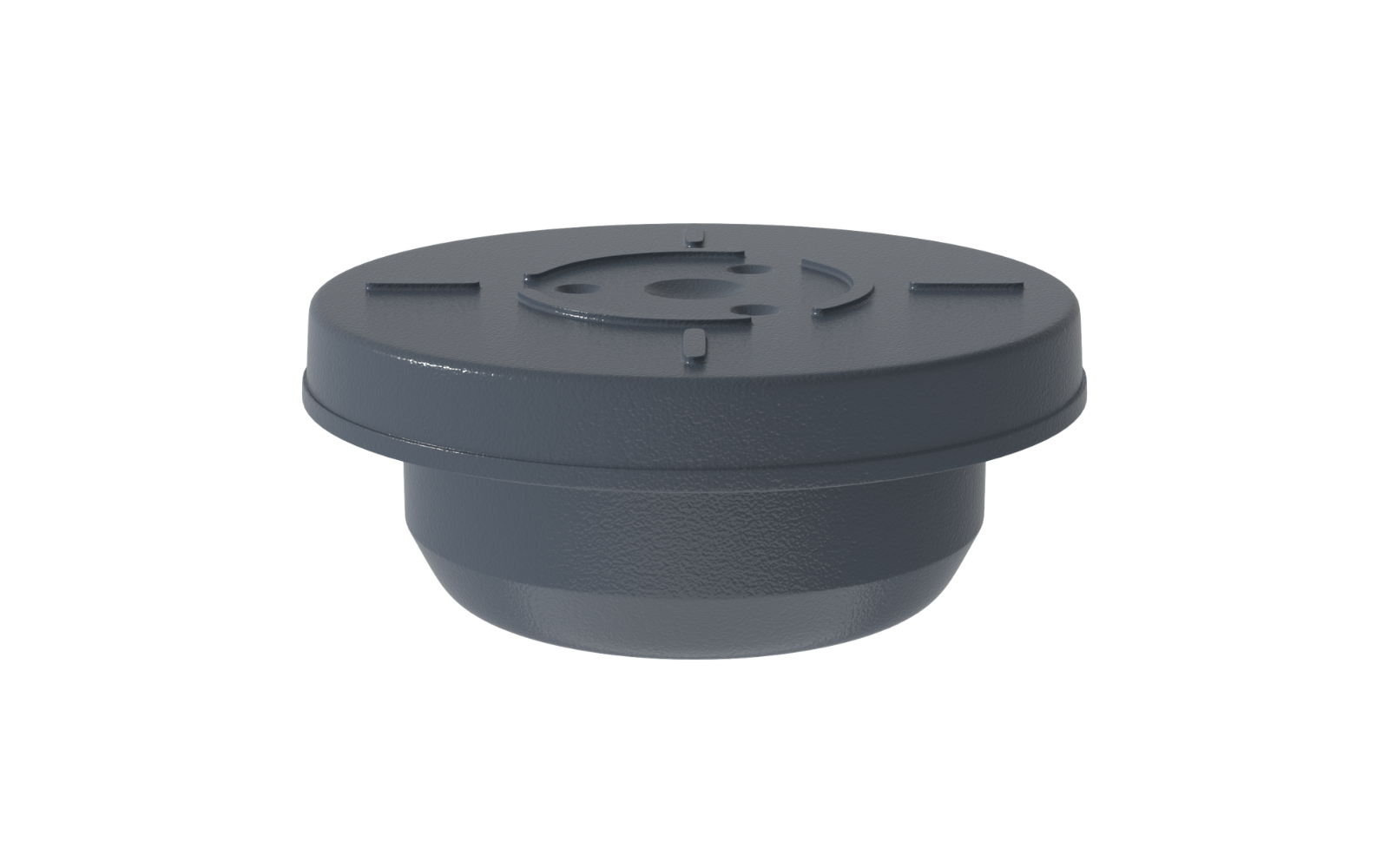
Elastomeric vial stoppers are designed to provide sealing performance, puncture resistance and compatibility with pharmaceutical processing.
Depending on the application, teams may need to assess:
- Container closure integrity within the selected vial and cap system
- Self-sealing performance following needle puncture
- Fragmentation and coring performance
- Extractables, leachables and formulation compatibility
- Performance after sterilization, storage and transportation
Datwyler’s stopper portfolio includes FM140, FM257, FM457 and FM460 compounds across selected serum, lyophilization and infusion designs. Product suitability should be confirmed for the intended drug and container system.
OmniFlex® coated stoppers
OmniFlex® stoppers use a full-surface fluoropolymer spray coating to create a barrier between the elastomer and drug product.
The coating is designed to minimize drug–component interactions, extractables and leachables, rubber shedding and the need for added silicone oil.
OmniFlex® options are intended for sensitive biologics, injectable drugs and lyophilized formulations. The coated flange is also designed to reduce stopper sticking during lyophilization.
Aluminum vial caps
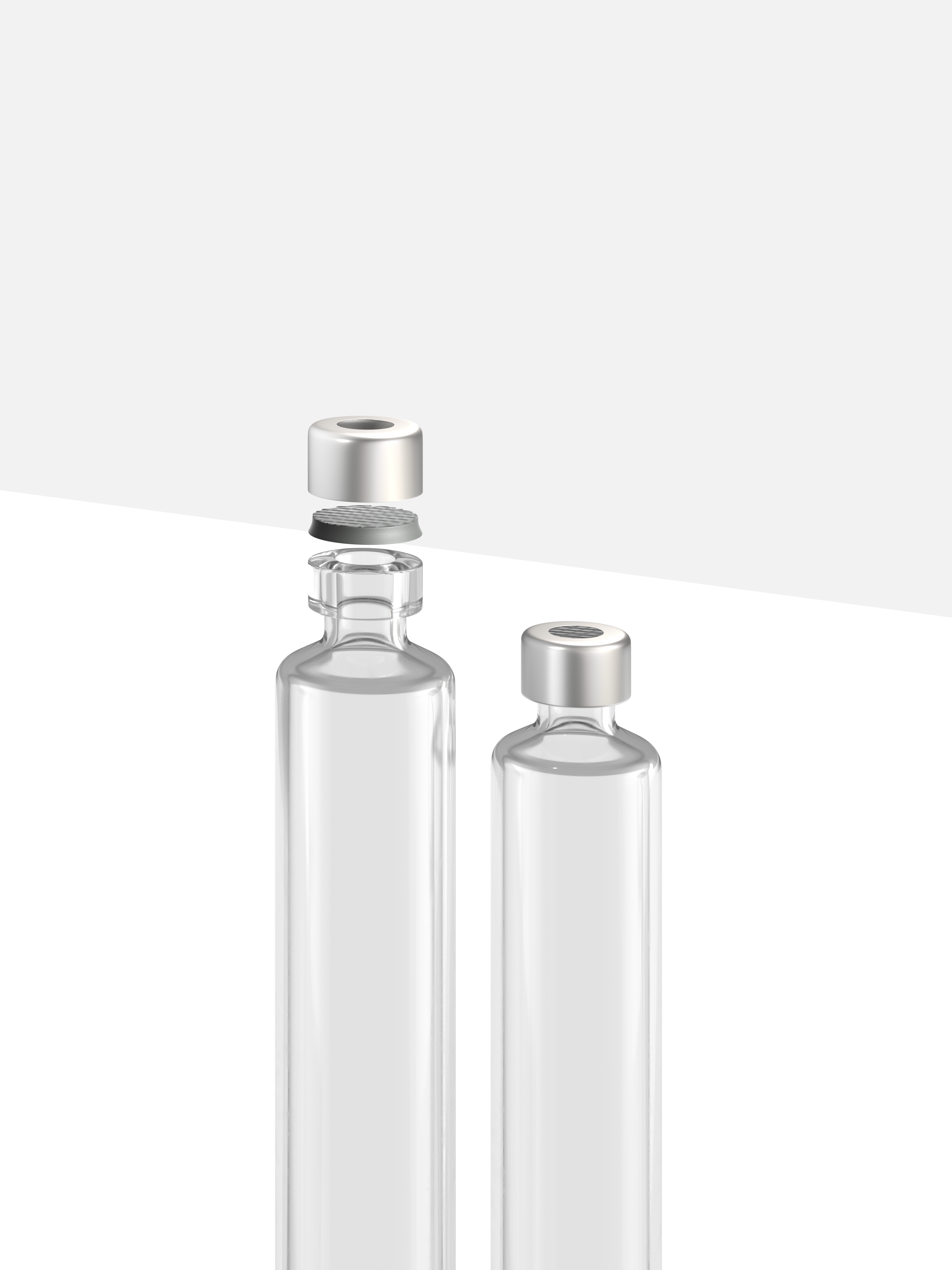
Aluminum caps secure the stopper against the vial finish and support consistent container-closure performance.
Cap selection should account for vial and stopper dimensions, crimping parameters, fill-finish equipment, opening performance and the intended end-user experience.
Datwyler’s cap portfolio includes:
- Standard and PrimeCap™ flip-off caps
- Total tear-off caps
- Center tear-off caps
- Aluminum hole caps
Options are available in multiple sizes, colors and finishes, with selected products supporting inkjet printing, embossing and debossing. Available customization and sterilization options should be confirmed for the chosen design.
PrimeCaps™ flip-off caps
PrimeCaps™ are engineered for consistent processing on high-speed filling and closing lines.
Accurim technology combines a center-gated disc, rounded edges, controlled opening-force design and a precision skirt edge to support feeding, seating, crimping and inspection.
PrimeCaps™ are available in selected 13 mm and 20 mm formats, with RFS, RTU and RTP packaging options. The range includes multiple plastic-disc and aluminum-ring colors, along with selected printing and embossing options.
Support throughout drug development
Global manufacturing and supply
Datwyler manufactures healthcare components across eight sites in Europe, North America and Asia. Its global network supports regional sourcing, supply-chain flexibility and business continuity planning.
Production locations and dual-sourcing options should be confirmed for the selected stopper, cap, compound, coating and manufacturing standard.
Material and component expertise
Datwyler develops proprietary elastomeric compounds, coating technologies and aluminum closure solutions for parenteral drug packaging.
Technical teams can support component selection, system evaluation and application-specific development.
Quality-focused manufacturing
Datwyler’s Advanced and FirstLine® manufacturing standards incorporate controlled production processes, automation, inspection and validated cleaning technologies.
FirstLine® provides a fully integrated cleanroom environment for applications requiring particularly stringent contamination control.
Technical and regulatory support
Datwyler provides technical documentation, data packages and application support to assist component evaluation, drug development and regulatory submissions.
These resources complement the customer’s product-specific qualification and validation activities.
Who is this brochure for?
This brochure is intended for:
- Pharmaceutical and biotechnology development teams
- Packaging and container-closure engineers
- Fill-finish and manufacturing teams
- Quality and regulatory professionals
- Procurement and supply-chain teams